Scope
This policy applies across Anthesis services, environments, and integrations.
Services
Phloem, Xylem, CLI, plugins, and related tooling.
Environments
Development, staging, and production environments.
People
All personnel with access to Anthesis systems.
Third parties
External integrations and dependencies are admitted explicitly.
Security principles
Anthesis is designed around governance, traceability, and safe failure.
Human sovereignty
Humans retain final authority over security decisions.
Defense in depth
Multiple layers of safeguards across the stack.
Least privilege
Access is minimized for users, services, and agents.
Traceability
Security-relevant events are logged immutably.
Security by design
Threat modeling and security gates are part of the SDLC.
Fail securely
Default to safe states when uncertainty exists.
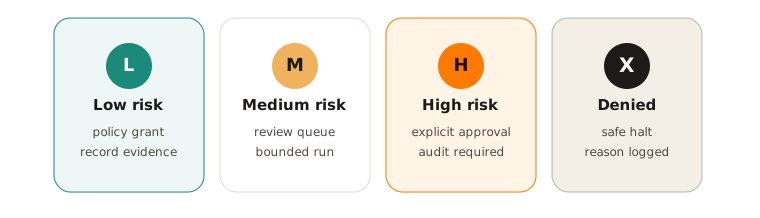
Risk routing
Autonomy is conditional. Authority increases with consequence. Risk classification is evaluated before execution and recorded with the outcome.
Core requirements
Baseline controls required across Anthesis systems.
Authentication
Production API access must be authenticated.
Authorization
Requests are authorized via policy controls.
Input validation
Inputs are validated and sanitized.
Secrets management
No secrets in Git or logs; rotation required.
Data protection
Production systems must protect sensitive data at rest and in transit.
Monitoring
Production security events must be detected and alerted.
Secure SDLC
Security testing and reviews are mandatory.
Incident response
Follow the incident response playbook for all events.
Third-party risk
External tools are admitted and scoped explicitly.
Roles and responsibilities
Clear ownership ensures accountability across security activities.
Security team
Owns policy, leads incident response, audits compliance.
Engineering
Implements controls and follows secure coding guidance.
DevOps
Maintains secure infrastructure and monitoring.
Management
Approves policy changes and resources.
Compliance and review
Reviewed annually or after P0/P1 incidents.
Alignment
Security work should align with CSSLP practices, OWASP Top 10, and applicable controls.
Review cadence
Annual review or post-incident update.
Report a security issue
We welcome responsible disclosure from security researchers.
Contact
Security.txt
See /.well-known/security.txt for disclosure details.